

Generators come in many forms: portable, standby, inverter, solar, diesel, and hybrid power units.
I’ve spent years specifying, installing, and maintaining power systems, so I know what makes each type work well or fail. This guide walks you through the main Types Of Generators, how they differ, where to use them, and practical tips from hands-on experience. Read on to learn which Types Of Generators fit your home, job site, boat, or business so you buy with confidence and avoid costly mistakes.

What is a generator?
A generator converts mechanical energy into electrical energy. Most generators use an engine to spin a rotor inside a magnetic field. This motion creates electricity you can use for lights, tools, appliances, and critical systems.
Generators vary by fuel, design, size, and control systems. That variation defines the common Types Of Generators and their best uses. Understanding basics helps you choose the right unit for safety, cost, and reliability.
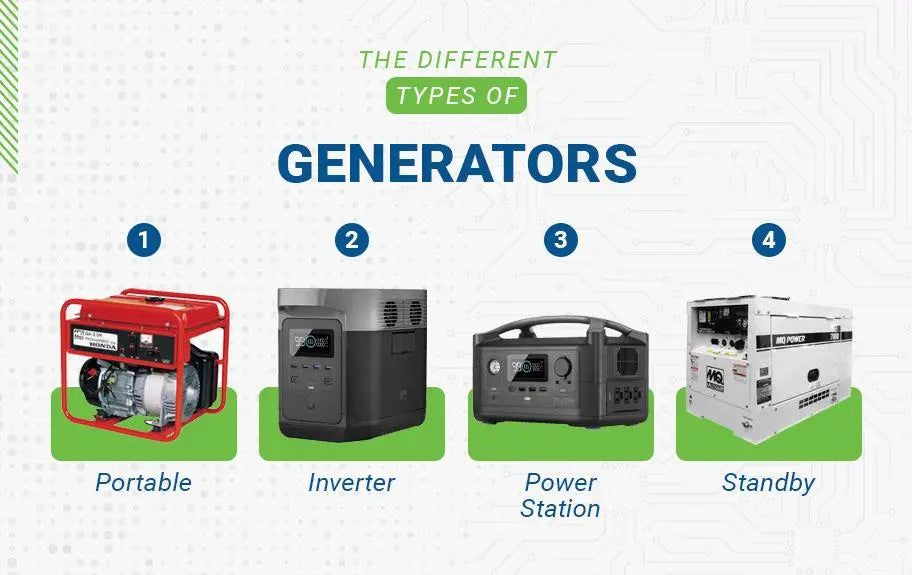
Main Types Of Generators
Below are the most common Types Of Generators, explained with benefits, limitations, and typical uses.
Portable gas and diesel generators
Portable generators are small, mobile units. They usually run on gasoline or diesel and provide power for tools, camping, and short outages.
Benefits
- Affordable and easy to move.
- Good for temporary use, job sites, and emergency backup.
Limitations
- Noisy and less fuel efficient.
- Not safe for indoor use without proper ventilation.
Typical capacity ranges from 1 kW to 10 kW. I once used a 4 kW portable on a weekend renovation; it ran tools all day but needed frequent refueling.
Standby (automatic) generators
Standby generators are permanently installed and tied to a fuel source like natural gas or propane. They start automatically when power fails.
Benefits
- Seamless backup for homes and businesses.
- Higher power capacity and long run times.
Limitations
- Higher upfront cost and professional installation.
- Requires regular maintenance and permits.
Standby units are ideal when you need uninterrupted power for HVAC, medical equipment, or server rooms.
Inverter generators
Inverter generators produce stable, clean power using electronic circuits. They are quieter and more fuel-efficient than standard portables.
Benefits
- Cleaner power safe for sensitive electronics.
- Compact, quiet, and efficient.
Limitations
- Higher cost per watt.
- Often lower peak power for heavy loads.
I favor inverter models for RV trips and home office backup because they protect laptops and chargers.
Solar generators and battery-based systems
Solar generators combine solar panels, battery storage, and an inverter. They store renewable energy for use when the sun isn’t shining.
Benefits
- Quiet, low operating cost, and emissions-free.
- Good for off-grid living and small backups.
Limitations
- High initial cost and limited runtime without large battery banks.
- Output depends on sun and battery capacity.
These are great for tiny homes, remote cabins, and eco-conscious users.
Diesel generators and industrial units
Large diesel generators power hospitals, data centers, factories, and large buildings. They are built for heavy duty and long runtimes.
Benefits
- Robust, reliable, and fuel-dense.
- Good for continuous operations and heavy loads.
Limitations
- Very loud, heavy, and require strict maintenance.
- Emissions and fuel storage regulations apply.
Large facilities often have multiple diesel units for redundancy.
Rotary and turbine generators
Rotary and gas turbine generators are used in large plants or for specific industrial needs. They convert high-speed rotation into electricity with compact designs.
Benefits
- High power-to-weight ratio and long life.
- Efficient at steady, large loads.
Limitations
- Very expensive and complex to maintain.
- Typically used only by utilities or large industrial sites.
Marine generators
Marine generators are built for boats and ships. They are compact and tuned to handle motion, salt air, and marine loads.
Benefits
- Corrosion-resistant and compact.
- Designed for AC loads onboard.
Limitations
- Specialized parts and servicing.
- Must meet marine safety codes.
Hybrid generators
Hybrid units combine solar, battery storage, and a traditional engine. They switch sources for efficiency and longer runtime.
Benefits
- Fuel savings and lower emissions.
- Flexible operation in diverse conditions.
Limitations
- More complex controls and higher cost.
- Requires integrated design and skilled setup.
Hybrid systems are a smart middle ground for users who want reliability with lower fuel use.
People also ask:
How long can each type run?
Runtime depends on fuel or battery size. Portables run hours; standby and diesel can run days with steady fuel; solar-battery runtime depends on capacity and recharge.
Are inverter generators better for electronics?
Yes. Inverter generators output clean sine-wave power with low harmonic distortion, which is safer for sensitive electronics.
Can I use a generator indoors?
No. Most fuel-burning generators produce carbon monoxide and must run outdoors, away from windows and vents. Use battery or solar systems for indoor power.

How to choose the right Types Of Generators for your needs
Choosing a generator is about power, runtime, fuel, noise, and cost. Follow these steps.
Estimate loads
- List appliances and their starting and running watts.
- Sum running watts and ensure surge capacity covers startup spikes.
Choose fuel type
- Gasoline: common for portables.
- Diesel: best for heavy-duty and long runtimes.
- Natural gas/propane: good for standby units with steady supply.
- Solar/battery: best for quiet, emission-free needs.
Consider runtime and fuel storage
- Longer outages mean larger fuel tanks or battery banks.
- Check local storage rules for diesel/gasoline.
Look at noise and location
- Inverters and solar are quiet.
- Standby units may need noise-reducing enclosures.
Check safety and compliance
- Permits, transfer switches, and carbon monoxide rules matter.
- Professional installation is usually required for standby systems.
Budget and lifecycle cost
- Consider fuel cost, maintenance, installation, and expected life.
- Sometimes a higher upfront cost saves money long term.
I often recommend starting with a clear load list. On a house call, a homeowner wanted a 7 kW standby but only needed 3 kW for essentials. The smaller unit saved money and fit the budget.

Maintenance and Safety for Types Of Generators
Regular care keeps generators reliable and safe. Follow a simple schedule.
Daily or weekly checks for portables during heavy use
- Inspect fuel level, oil, air filter, and run time.
Monthly or quarterly checks for standby and inverters
- Test automatic transfer switch and run the engine under load.
- Inspect battery health for battery-based systems.
Annual service
- Change oil, inspect fuel system, clean cooling passages, replace worn parts.
Safety tips
- Never run fuel generators indoors or in attached garages.
- Use a transfer switch to prevent backfeed into the grid.
- Store fuel safely and rotate it to avoid stale gasoline issues.
- Install CO detectors in homes with nearby generator use.
From experience, the most common mistake is skipping load testing. A generator that runs without load may fail under real demand. Test under realistic conditions at least once per year.

Personal Experience and Practical Tips
I’ve installed and maintained many Types Of Generators for homes and small businesses. Here are lessons learned.
Size for essentials first
- Prioritize refrigerators, heating, and communications rather than everything at once.
Account for startup surge
- Motors and compressors need more power to start. Don’t undersize on running watts alone.
Balance fuel redundancy
- For long outages, mix fuel types if possible or add a transfer plan for refueling.
Keep spare parts and a small tool kit
- Filters, belts, and spark plugs can fix many issues on site.
Practice safe fueling
- Cool the engine before refueling and avoid spills.
One memorable job: a small clinic needed backup for lights and a fridge. We chose a compact diesel standby with auto-start. It saved critical equipment during storms and proved its value during a week-long outage.

Frequently Asked Questions of Types Of Generators
What is the difference between a portable and a standby generator?
Portable generators are movable and best for short-term use. Standby generators are permanent, start automatically, and support longer outages.
Can I power my whole house with an inverter generator?
Some inverter generators can power an entire small house, but most support select circuits and smaller loads. Check wattage and surge ratings before relying on one unit.
How often should I service a standby generator?
Service at least once a year, and run it monthly or bi-weekly under load to keep batteries and the engine healthy.
Are solar generators powerful enough for home backup?
Solar-battery systems can support essential loads and extend runtime, but full-home backup usually needs large battery banks and additional generation or a hybrid engine.
Is installation of a standby generator a DIY job?
No. Standby generators need professional installation, permits, and a transfer switch to meet code and ensure safe operation.
Conclusion
You now have a clear map of the main Types Of Generators, their strengths, and where each one fits. Choose based on your power needs, budget, fuel access, and noise or emissions limits. Start by listing your critical loads, then match a generator type to those needs.
Take action: calculate your required watts, compare fuel options, and consult a licensed installer for standby systems. Share your situation or questions below, subscribe for more practical guides, or leave a comment about your generator experience.