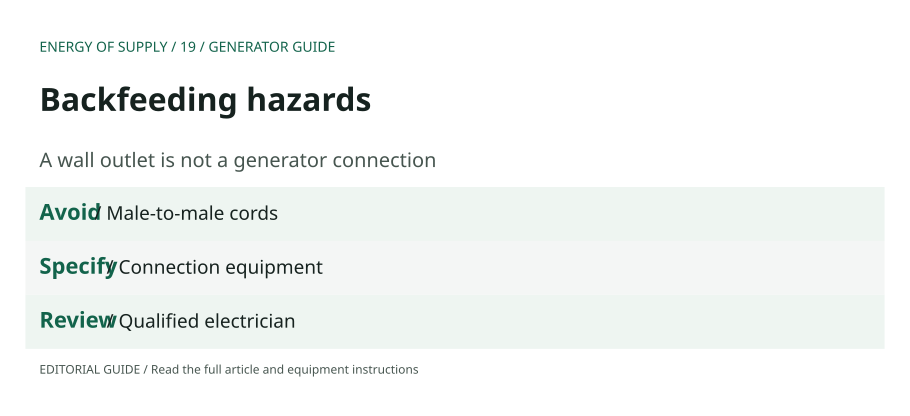
Do not power house wiring by connecting a portable generator to a wall outlet. CPSC warns that male-to-male cords used for this practice, commonly called backfeeding, can cause electrocution or fire. Source: CPSC’s 2026 warning.
What to avoid
Do not buy or use a cord with two male plug ends as a household generator connection. If your outage plan depends on feeding a wall receptacle, stop and have the plan reviewed by a qualified electrician. A seller’s claim, a video demonstration, or an assurance that a breaker will be switched off is not a substitute for specified connection equipment.
Make the intended backup clear
Tell the electrician whether you need individual appliances powered or selected household circuits supported. Bring the generator model, panel information, and essential-load list. Ask for a written proposal identifying the equipment and operating procedure appropriate to that project.
Questions for the electrician
- What exact equipment separates the intended power sources?
- Which generator outlet, cord, and inlet are specified?
- Which household circuits can be supported?
- What approvals and inspections apply to this installation?
- What steps must the operator follow during an outage?
- What labels and written instructions will be supplied?
Review the total connection scope
Ask about transfer equipment, any panel work, wiring, inspection handling, and final testing. Generac explains that transfer switches select utility or generator power and can operate manually or automatically depending on the application. Source: Generac transfer-switch discussion. Have the installer review the exact installation rather than choosing equipment from a generic diagram.
Keep exhaust safety in the same plan
A professionally specified electrical connection does not resolve portable-generator placement by itself. CDC says to operate the generator outdoors at least 20 feet from doors, windows, and vents. Source: CDC generator guidance. Plan the generator location and cord route together.
Common questions
Does a thick cord make wall-outlet backfeeding acceptable?
No. The CPSC warning addresses the hazardous connection practice, not merely thin conductors.
Can I follow an online breaker-switching sequence instead?
Do not use a sequence from a video as a replacement for appropriate connection equipment and qualified installation.
Where can I start?
Use the electrician quote checklist and ask for an assessment of your actual backup requirements. This guide deliberately does not provide instructions for performing backfeeding.