
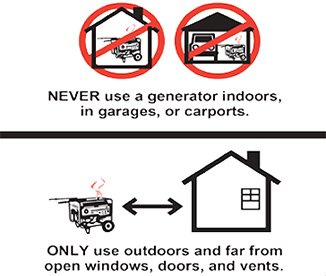
A portable fuel-burning generator needs an outdoor operating location that keeps exhaust away from the home. CDC advises operating it outdoors more than 20 feet from windows, doors, and vents, and never inside a home or garage even with openings left open. Source: CDC carbon monoxide guidance.
Featured image: CDC.
Turn the distance guidance into a property plan
The CDC advises using a portable generator outdoors more than 20 feet from windows, doors, and vents. Treat this as a starting requirement for planning, not as a guarantee that any spot beyond a measured line is suitable. Exhaust direction, nearby occupied buildings, outdoor conditions, and the generator manufacturer’s instructions still matter. Before an outage, walk around the property and identify openings on every relevant side of the home, including low basement windows and vents that are easy to overlook from the driveway.
Measure to openings rather than assuming that distance from one exterior wall answers the question. A convenient location near a detached structure may still be near that structure’s door or a neighbor’s window. Mark possible operating areas on a simple sketch, then review whether the selected spot is genuinely outdoors, accessible, and away from places where people gather. The sketch is a planning aid; it is not a substitute for following official safety guidance or the equipment instructions.
Do not confuse open doors with safe ventilation
A garage with its large door raised is still an unsafe operating place for a portable generator. The same concern applies to a home, basement, crawlspace, shed, and other enclosed or partly enclosed spaces. Carbon monoxide is not visible and cannot be identified by smell. A fan, an open window, or an exhaust hose improvisation does not turn an indoor location into an acceptable one. The practical decision is whether you have a suitable outdoor location at all.
This distinction matters during bad weather because people may be tempted to pull the generator under whatever roof is available. Review weather arrangements beforehand, using the manufacturer’s instructions and CPSC guidance. Protecting equipment from moisture must not create an enclosure that traps exhaust or places it near building openings. If the available setup cannot meet both exhaust and electrical safety needs, do not solve the conflict by moving the operating generator indoors or into a garage.
Plan cord length after selecting the location
A short existing extension cord should not determine where the generator runs. Choose the suitable outdoor position first, then measure the real route to the appliance or professionally installed connection. The route may be longer than the straight-line distance because it needs to avoid traffic, puddles, sharp edges, and places where a door could pinch the cord. Record the required length and load so the appropriate outdoor cord can be selected and its electrical suitability checked.
For illustration, an opening may be 25 feet from a proposed outdoor spot, while the safe cable route around a walkway takes 45 feet. A cord that reaches only by dragging the generator closer to the opening fails the location plan. This example describes routing, not an approval of a specific cord or site. Longer electrical runs also need a voltage-drop and rating review. Solve the whole route with suitable equipment instead of treating extra cord length as an optional accessory.
Include neighboring buildings in the review
Your household is not the only possible exposure point. Look for doors, windows, and vents on nearby homes, apartments, workshops, or other occupied structures. Pay attention to common areas, shared driveways, and places where exhaust could enter someone else’s space. A generator sitting at the far edge of your lot might be closer to a neighbor’s opening than to yours. Property boundaries are useful for access and ownership questions, but they do not stop exhaust from moving.
Recheck the surroundings when something changes. A parked vehicle, temporary storm barrier, new fence, or changed outdoor storage arrangement can alter access or make the chosen spot less suitable. Avoid assuming that a location used successfully once remains appropriate forever. Keep a second plan for circumstances in which the first spot becomes inaccessible. If neither arrangement is suitable, the household needs another way to meet its outage needs rather than a compromise that depends on luck.
Prepare alarms as a separate protection layer
Battery-operated or battery-backup CO alarms help provide warning during an outage, when normal household power is unavailable. CDC guidance calls for detectors near every sleeping area. Use the exact alarm manufacturer’s installation instructions and applicable local requirements to decide mounting position and the full arrangement for your home. Do not invent a universal mounting height based on a general statement that a particular gas rises or sinks. Different alarm designs have different instructions and placement restrictions.
Record the alarm model, installation date, power source, and replacement requirements. Locate the instructions before an outage and make sure adults know how the alarm and its other signals sound. A test button check and a battery check are preparation tasks; they do not establish that generator exhaust cannot reach the home. An alarm supplements prevention. Its presence never authorizes indoor generator operation or a generator location that conflicts with the outdoor distance guidance.
Write an emergency response that does not depend on diagnosis
If a CO alarm sounds, move everyone to fresh air and contact emergency services from outside. Do not stay inside to search for a source, open windows as the main response, or reset the alarm and resume sleeping. Follow the responders’ instructions about re-entry. Someone experiencing possible exposure should not be expected to troubleshoot equipment first. Make the outdoor meeting location easy to identify so children, guests, and household members can account for one another promptly.
Potential symptoms include headache, dizziness, weakness, nausea, and confusion. These are reasons to get to fresh air and seek emergency help when exposure is possible, not a checklist for proving that an alarm is false. A person may become impaired before making a good decision. The household plan should therefore emphasize immediate exit rather than debate. Share the plan with visitors and anyone who might be present while the generator runs, particularly during overnight outages.
Review the plan in daylight before you need it
Use a calm preparation day to identify the outdoor operating spot, confirm the route, inspect the equipment, locate the manual, and review the alarm and emergency arrangements. This is easier than making decisions during heavy rain, darkness, a flooded yard, or an evacuation warning. Keep a flashlight and the written plan accessible. Assign responsibilities for setup and monitoring without assuming that the most experienced operator will always be home when the power fails.
A useful household record has four parts: a location sketch identifying relevant openings, the intended cord route and equipment, alarm information, and the emergency meeting plan. Add the date of the review so later changes are visible. This record can also reveal a problem before money is spent on an inlet or a short cord. The goal is a workable outdoor arrangement that the household understands, rather than a list of accessories without a safe place to use them.
When the usual location is unavailable
Storm debris, flooding, damaged equipment, or a blocked route can make a previously planned setup unusable. Reassess before operating. Do not substitute a garage, enclosed porch, or a spot beside an opening because it is closer and dry. If safe operation is unavailable, consider alternatives that do not require a fuel-burning engine at the property, or relocate to a safe place as appropriate for the emergency. A generator is useful only when its operating conditions can be met.
Keep portable-generator guidance separate from stationary standby-generator installation requirements. A permanently installed system requires its own manufacturer’s instructions and professional site assessment; this article does not approve a standby clearance or exhaust arrangement. For a portable unit, the central decision remains straightforward: use an appropriate outdoor location, keep away from openings, follow the equipment instructions, prepare CO alarms, and make the response plan clear before running the engine.
Plan the location before an outage
Walk around the property while conditions are normal. Identify windows, doors, vents, and nearby occupied buildings before selecting a possible operating area. Write down the route for the power cord and the position from which the operator will access the generator. If your property cannot accommodate an appropriate outdoor setup, obtain another backup plan rather than improvising an indoor location.
Check distance from openings
Measure from the proposed location to relevant openings instead of estimating by eye. Photograph the intended spot for your own preparation record. Recheck the plan when a door or window will be used differently during an outage. Follow the generator manual as well as the public-health guidance; this checklist does not certify a site as safe.
Keep the indoor alarm plan separate
CDC recommends a battery-powered or battery-backup CO detector when using a generator. An alarm is an additional protective measure, not permission to operate closer to the house or in an enclosed area. Do not treat a quiet alarm as evidence that an unsuitable placement has become acceptable.
Prepare a practical checklist
- Read the exact generator operating manual.
- Mark potential outdoor locations and building openings.
- Measure the planned distances.
- Plan the cord route without moving the generator toward the house.
- Identify how household members will respond to a CO alarm.
- Keep another plan available if conditions make the setup unsuitable.
If an alarm sounds
CPSC advises getting outside to fresh air immediately and calling 911 if CO poisoning is suspected. Its guidance recommends alarms with battery power or backup on every level and outside sleeping areas. Read CPSC carbon monoxide advice before an emergency.
Common questions
Can an open garage door make operation acceptable?
CDC explicitly warns against garage operation even when doors and windows are open.
Is the distance rule a standby-generator installation specification?
This article addresses portable generator operation. For a permanently installed standby unit, consult the exact installation manual and qualified installer.
Should the location be planned after the power fails?
Prepare it beforehand so that distance, cord routing, and the household response plan can be reviewed together.
3 thoughts on “Portable Generator Carbon Monoxide Safety Distance: Placement Checklist”