
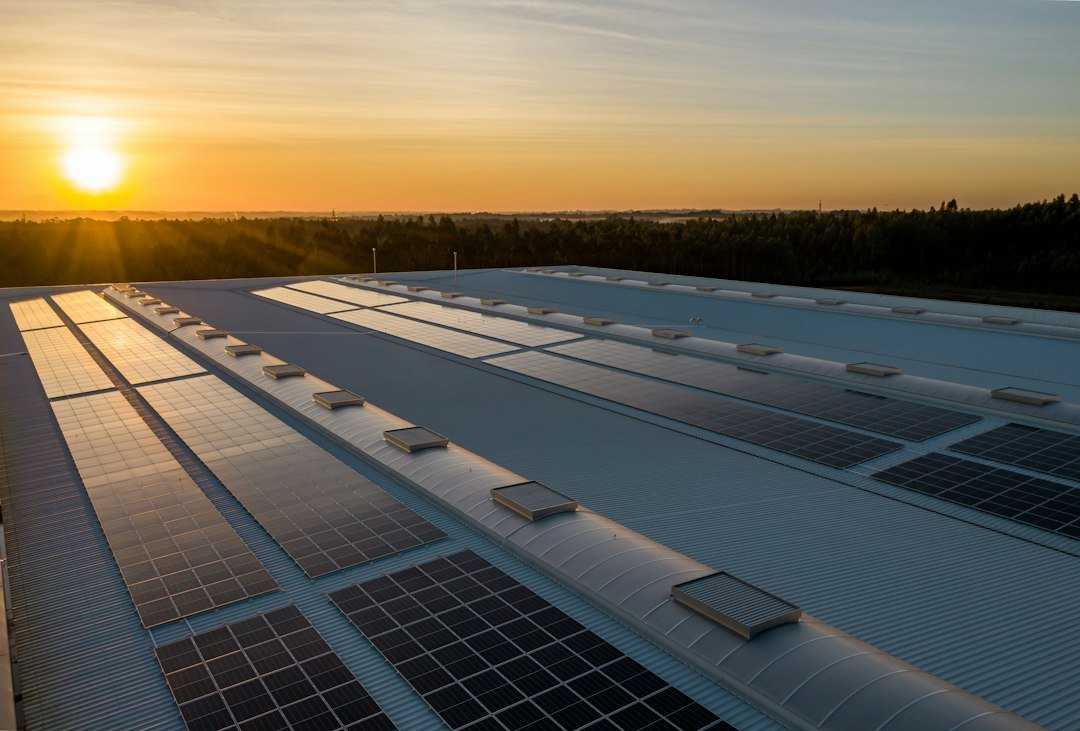
When are solar panels most efficient? Solar photovoltaic panels convert sunlight into electricity most efficiently when they receive strong, direct sunlight while their cells remain relatively cool. For a typical fixed rooftop array, electricity output is often highest around solar noon on a clear day, when the sun is highest in the sky. However, that is not necessarily the moment when the solar cells achieve their highest conversion efficiency. Hot modules lose some conversion efficiency even as intense sunlight helps them generate more power.
The distinction matters to homeowners. A bright summer afternoon may deliver more total electricity than a cool winter afternoon because of longer daylight and a stronger solar resource, despite the panels operating less efficiently in the heat. The most useful question is often not just when a panel is most efficient, but when the entire installation produces the most usable energy over a day or year.
What Time of Day Are Solar Panels Most Efficient?
For most fixed-tilt residential systems, solar energy reaching the panels generally rises after sunrise, becomes strongest near solar noon, and declines toward sunset. The U.S. Department of Energy explains that sunlight travels through less atmosphere when the sun is high, so the greatest amount of solar energy usually reaches the ground around solar noon. That is why the peak of a clear-day solar production graph is commonly near the middle of the day.
Solar noon is the moment when the sun crosses its highest point in the local sky. It is not always exactly 12:00 p.m. on a wall clock. Time zones, daylight saving time, longitude, and the date can shift the clock time. Rather than assume a universal noon-to-2-p.m. peak, look at your inverter’s hourly monitoring data for clear days at your address.
Early morning: cool panels but weaker sunlight
Morning air can keep modules cooler, which is favorable for semiconductor efficiency. But the sun is lower, light passes through more atmosphere, and nearby trees or buildings may cast long shadows. A cool panel receiving relatively little light can generate less electricity than a warmer panel in strong sunlight. If a roof faces east, its production curve may be weighted toward morning hours rather than centered on midday.
Late morning and midday: often the highest power output
As sunlight becomes more direct, a well-oriented unshaded array typically generates more current and more total power. For a south-facing array in much of the United States, the strongest production commonly occurs around solar noon. Yet the cells may also heat up, lowering voltage and reducing their conversion efficiency relative to cooler conditions. High sunlight and moderate cell temperature are the ideal combination.
Late afternoon: sunlight falls and shadows lengthen
A west-facing roof may generate a greater share of its energy in the afternoon than an east-facing roof, which can help households with late-day electricity demand. That does not mean a west-facing panel becomes inherently more efficient at that hour. It means the orientation changes how much sunlight reaches the module. Shadows from chimneys, neighboring buildings, and trees can further reduce output as the sun moves toward the horizon.
Solar Panel Efficiency Versus Solar Panel Power Output
These two terms are often confused. Conversion efficiency describes the share of incoming solar energy converted to electrical energy. Power output is the electrical power produced at a moment, measured in watts or kilowatts. Energy yield is the electricity produced over time, measured in watt-hours or kilowatt-hours. A panel can be operating at a slightly lower conversion efficiency yet generate more power because much more sunlight is hitting it.
For example, imagine sunlight supplies 1,000 watts of radiant power to a panel’s surface and the panel converts 20% of that into electrical power. Its output is 200 watts under those simplified conditions. If the incoming sunlight drops to 500 watts and the panel converts 21%, the output becomes 105 watts. The second case has better conversion efficiency but substantially lower electrical output. These numbers illustrate the calculation and are not specifications for a particular product.
The Department of Energy’s PV design and energy yield guide makes the same conceptual distinction: laboratory efficiency is not the same as energy actually harvested outdoors after accounting for heat, dirt, shade, and other factors. Homeowners should evaluate annual kilowatt-hour production, not choose a system based solely on an advertised panel efficiency percentage.
Are Solar Panels More Efficient in Cold or Hot Weather?
Most conventional silicon solar cells operate more efficiently when their temperature is lower, assuming comparable sunlight. The Department of Energy notes that rising temperature causes a relatively small increase in cell current but a larger decrease in voltage, reducing power conversion efficiency. This is why a cool, sunny spring day can be excellent for solar performance even if it does not have the longest daylight hours of the year.
A panel’s cell temperature is not the same as the surrounding air temperature. Sunlight warms the module, and the cell can become considerably hotter than the air on a clear day. Wind and mounting ventilation can help carry heat away. Avoid treating a weather forecast of 77°F as proof that the cells are at the standard laboratory test temperature of 77°F (25°C).
What is the solar panel temperature coefficient?
Manufacturers publish a temperature coefficient for maximum power, often shown as a percentage change per degree Celsius. It describes how the module’s power rating changes as cell temperature differs from the reference condition, under otherwise comparable test assumptions. The exact coefficient depends on the model; check the module’s datasheet rather than assuming one number applies to every panel.
Here is a hypothetical calculation: suppose a panel has a maximum-power temperature coefficient of -0.35% per °C. If its cells are 20°C above the 25°C reference temperature, the simplified reduction is 20 × 0.35% = 7%. A nominal 400-watt module would then have an approximate temperature-adjusted power of 372 watts at the same reference irradiance, before other system losses. This is an illustration of the coefficient, not a prediction of real roof output or a claim about any specific panel.
Why can a hot summer day still produce more electricity?
A sunny summer day can have longer daylight and stronger total solar radiation than a winter day at the same location. Those benefits may outweigh the efficiency penalty from heat, resulting in more kilowatt-hours across the day. In contrast, winter’s cool cells may convert sunlight more efficiently but receive less total sunlight because of shorter days, lower sun angles, clouds, or snow cover. The answer depends on climate, roof geometry, and local weather.
Which Season Is Best for Solar Panel Efficiency?
There is no single best season for every meaning of the word efficiency. Cool, clear conditions can favor conversion efficiency, while longer, sunnier days can favor daily electricity generation. In much of the United States, a fixed rooftop array tends to produce more total energy in the longer-day months than in winter, but local monsoon patterns, coastal clouds, high temperatures, and snow can change the ranking.
| Season or condition | Potential advantage | Possible limitation |
|---|---|---|
| Clear spring day | Strong sunlight with moderate temperatures | Variable clouds and seasonal sun angle |
| Sunny summer day | Long daylight and high solar resource | Hot cells reduce conversion efficiency |
| Clear fall day | Cooler panels and useful sunlight | Shortening days and lower sun angle |
| Sunny winter day | Cold cells can operate efficiently | Short daylight, lower sun angle, snow or shading |
The DOE’s winter solar performance guidance confirms that photovoltaic modules can operate more efficiently in cold conditions while snow and winter weather can limit generation. The right comparison is annual production for your exact roof, not a general statement that either summer or winter is always best.
Do Solar Panels Work Better on Sunny or Cloudy Days?
Solar panels can generate electricity under clouds because some diffuse sunlight still reaches them. However, heavy cloud cover generally reduces the available solar energy and therefore the output. Light, variable clouds can produce rapidly changing generation as sunlight alternately reaches and leaves the array. Monitoring data may show brief spikes or dips; one unusually bright or cloudy minute should not be mistaken for a reliable daily production estimate.
An unshaded, cool panel under bright direct sunlight often performs very well. But saying panels are most efficient on cloudy days confuses the temperature benefit with the much larger reduction in available sunlight. If you are interested in production under overcast conditions, see our detailed guide on how solar panels work on cloudy days.
How Do Roof Direction and Tilt Affect Peak Solar Hours?
The direction and tilt of a panel change the angle at which sunlight strikes it throughout the day and year. In the Northern Hemisphere, a south-facing array is commonly selected to maximize annual energy generation, though roof shape, shading, and utility prices may justify other orientations. The DOE’s guide for homebuilders says unshaded south-facing roofs with slopes roughly between 15 and 40 degrees often work well, while southeast-to-southwest orientations can also be productive.
An east-facing array shifts generation toward morning, and a west-facing array shifts generation toward afternoon. A roof’s best direction for annual kilowatt-hours is not necessarily the same as the best direction for the value of electricity under time-of-use pricing. A system designed to offset costly late-afternoon power may have a different preferred orientation than one designed strictly to maximize annual production.
Shading can matter as much as orientation. A tree branch that blocks part of a module or a chimney that casts a shadow during the strongest sunlight hours can reduce output. Modern power electronics can mitigate some shading impacts, but they do not create sunlight where there is none. A qualified installer should model annual shading and explain any design compromises.
What Are Peak Sun Hours?
Peak sun hours are not the number of clock hours during which the sun is visible. They express a day’s solar energy as the equivalent number of hours at a standard irradiance of 1,000 watts per square meter. A day with five peak sun hours does not mean that the array produced its full nameplate output for five consecutive hours; it means the total incident solar energy is equivalent to that amount of reference sunlight.
As a simplified illustration, a 6-kW array with five peak sun hours has 6 kW × 5 hours = 30 kWh of theoretical DC energy before losses. Actual delivered electricity can be lower because of temperature, inverter conversion, wiring, shading, dirt, and other system factors. A site-specific performance model is necessary for a realistic estimate.
For location-based projections, homeowners can use NREL’s PVWatts calculator. It models photovoltaic electricity production using location, system size, orientation, and other assumptions. Compare its monthly estimates with installer proposals and your own utility bills, and remember that forecasts are estimates rather than guaranteed generation.
How Can You Get the Most Electricity From Solar Panels?
- Choose a low-shade location. Avoid persistent obstructions during the hours when sunlight is strongest. Ask for a site-specific shade assessment.
- Optimize roof layout. Compare tilt and orientation options for annual production and your electricity rate plan.
- Maintain ventilation. Use mounting equipment and clearances approved by the installer and manufacturer rather than blocking airflow behind panels.
- Monitor production. Compare similar weather days and review monthly and annual kilowatt-hours, not only the maximum instantaneous wattage.
- Keep panels reasonably clean. Check for unusual soiling, pollen, bird droppings, or other buildup; follow manufacturer guidance and avoid unsafe roof access.
- Investigate new shade. Growing trees or nearby construction can change output after the system is installed.
- Have faults assessed safely. If the inverter reports errors or output drops unexpectedly, contact a qualified solar professional instead of opening live electrical equipment.
Do not assume frequent washing is always necessary. Rain can remove some dust, while local conditions determine whether additional cleaning is worthwhile. If cleaning is needed, use approved methods and a qualified service provider when roof access is hazardous. Our guide to solar panel efficiency explains how panel ratings relate to long-term performance.
When Should You Run Appliances to Use More Solar Power?
If your system does not have a battery, running flexible electrical loads while the panels are producing strongly can increase the amount of solar electricity used directly in the home. Depending on your roof orientation, this may be late morning through early afternoon on clear days. Examples include a dishwasher, laundry equipment, or compatible EV charging. Follow appliance safety instructions and do not overload circuits.
Whether shifting consumption saves money depends on your utility’s export compensation and time-of-use rates. A household with generous export credits may see a different benefit from one whose exported electricity is compensated at a lower rate than imported electricity. A battery can move some solar energy into evening hours, but adds cost and conversion losses. See whether solar panels need batteries for that decision.
How Can You Tell When Your Own Panels Are Most Productive?
Use your monitoring app to inspect power (kW) across clear days and energy (kWh) across months. A clear-day chart often shows a smooth rise toward a peak and a decline afterward. Repeated sharp dips may indicate shading, clouds, inverter behavior, or other factors. The same system can show different peak times in winter and summer as the sun’s path changes.
When comparing output, check that the weather conditions are comparable. An August day with hazy skies is not a fair test against a clear April day. Also consider inverter clipping: if the solar array can produce more DC power than the inverter’s AC output rating, the graph may flatten at the inverter limit. A flat-topped production curve is not automatically a fault.
If production appears unusually low, compare it with a site-specific expected value that accounts for weather and system age. The DOE’s solar performance guidance recommends evaluating actual generation against modeled generation under comparable solar resource and temperature conditions. That is more meaningful than comparing a single day’s peak wattage with the module nameplate rating.
Frequently Asked Questions
Are solar panels most efficient at noon?
They often generate their greatest power near solar noon on a clear day because sunlight is strongest then. But solar cell conversion efficiency may be lower if the modules become very hot. Peak power output and peak conversion efficiency are not necessarily the same moment.
Is morning or afternoon sunlight better for solar panels?
It depends on roof orientation, shade, weather, and module temperature. East-facing panels favor morning production; west-facing panels favor afternoon production. A cool morning can help conversion efficiency, but stronger midday sunlight often leads to higher power output.
What temperature is best for solar panels?
Silicon solar cells generally operate more efficiently at lower cell temperatures when the sunlight level is the same. The standard module rating condition uses a 25°C cell temperature, but that is a testing reference, not a universal optimum operating temperature or a target outdoor air temperature.
Do solar panels work better in winter?
Cold weather can improve conversion efficiency, but shorter days, a low sun angle, snow, and clouds may reduce daily energy generation. In many U.S. locations, summer still produces more total electricity across a day or month.
Can solar panels produce electricity on cloudy days?
Yes. Diffuse sunlight can still generate power, though output is usually lower than under bright direct sunlight. The amount depends on cloud thickness, solar equipment, and local conditions.
How many hours a day do solar panels work at maximum power?
There is no fixed number of hours. Panel nameplate power is measured under standardized conditions that may not occur for long outdoors. Peak sun hours are an energy-equivalent measure, not literal hours at full rated output. Use PVWatts or actual monitoring to estimate production for your location.
When is the best season to install solar panels?
Installation timing depends on roof readiness, installer scheduling, permitting, and weather. A system can begin generating whenever installation and required approvals are complete; it does not need to be installed during the sunniest season. Compare project readiness and total cost rather than waiting for a mythical season of perfect efficiency.
Bottom Line
Solar panels generally deliver their highest instantaneous power around solar noon on clear, unshaded days, but their cells convert sunlight more efficiently when they are cooler. The most productive day or season depends on both sunlight and temperature, along with roof orientation, shading, and weather. For homeowners, annual kilowatt-hours and the value of that electricity matter more than identifying a single perfect hour.
If you are planning an installation, ask for a site-specific annual production model and compare it with your electricity usage. If you already have solar, review hourly monitoring data on clear days and investigate persistent unexpected dips. That approach turns a general rule about solar efficiency into a practical decision for your roof.
Sources and Editorial Note
- U.S. Department of Energy: Solar Radiation Basics
- DOE: Solar Photovoltaic Performance and Efficiency Basics
- DOE: PV System Design and Energy Yield
- DOE: Winter Solar Performance
- NREL: PVWatts Calculator
Editorial note: Examples of panel efficiency, temperature coefficients, and energy production in this article are illustrative calculations, not specifications or guaranteed output for a particular installation. Featured photo: Nuno Marques / Unsplash.
1 thought on “When Are Solar Panels Most Efficient? Best Time and Season”