Can I get solar panels on my house? In many cases, yes. If you own a home with a structurally suitable roof, enough usable sunlight, and a location where the required permits and utility approvals can be obtained, a residential solar photovoltaic (PV) system may be possible. But you cannot tell whether a specific house qualifies from its address or roof appearance alone. Roof age, condition, shading, available space, electrical equipment, ownership rights, and local regulations all affect the decision.
The U.S. Department of Energy’s Homeowner’s Guide to Solar says solar panels can operate in all climates, while warning that older roofs, extensive tree shade, and roof geometry can make some properties poor candidates. This guide focuses on the question homeowners are really asking: Is my house suitable, am I allowed to install panels, and what should I check before paying an installer? For the hands-on installation process, see our separate solar installation guide.
Quick Answer: Can You Put Solar Panels on Your House?
A home is often a reasonable candidate when its roof is in good condition, the structure can support the proposed equipment, panels can receive useful sunlight, and the owner has authority to approve the work. A qualified installer or structural professional must evaluate the actual building. You also need a system design that complies with local building and electrical requirements, plus utility interconnection approval if you plan to connect it to the grid.
| Your situation | Can rooftop solar be possible? | What to check first |
|---|---|---|
| You own a detached house with a sunny roof | Often yes | Roof condition, shading, electrical service and permits |
| Roof is old or leaking | Possibly, after repairs | Roofing inspection and replacement timing |
| Roof faces east or west | Often yes | Site-specific annual production estimate |
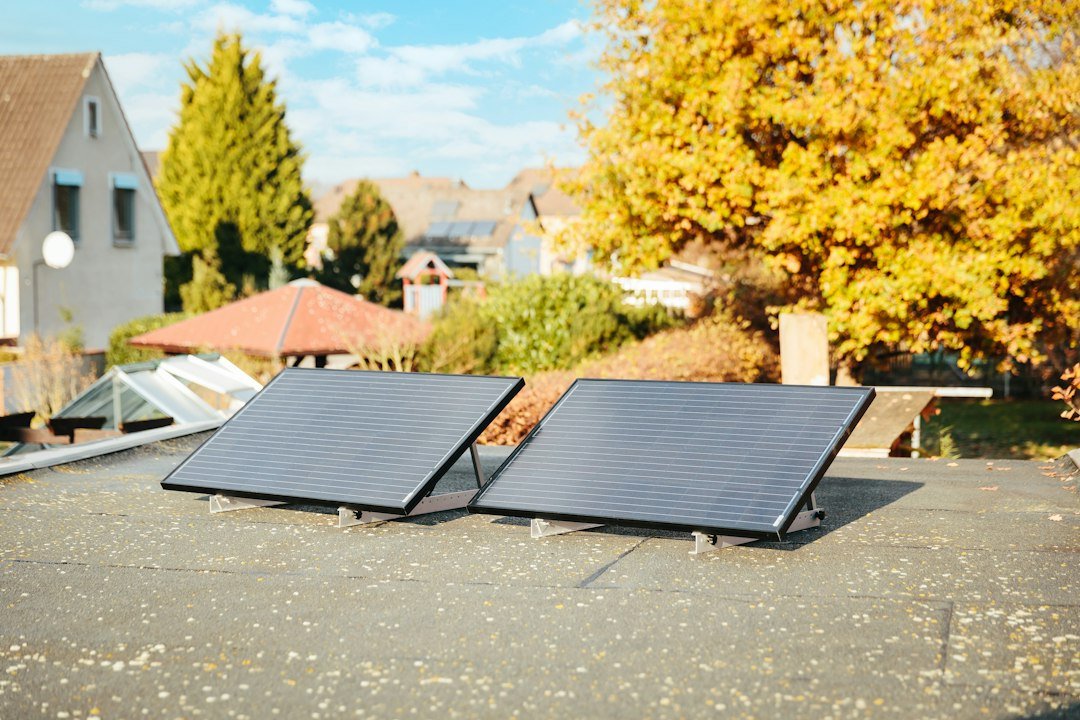
| Flat roof | Often yes | Mounting design, drainage, wind and structural loading |
| House is heavily shaded | Possibly, but may be poor value | Professional shade analysis |
| House is rented | Only with appropriate owner permission | Landlord approval or community solar alternatives |
| HOA-controlled property | Often, subject to rules | State solar-access law and HOA review |
| Condo or shared roof | Depends on ownership and association rules | Roof rights and association approval |
1. Is Your Roof Strong Enough for Solar Panels?
Roof suitability is more than finding a sunny patch. Panels, mounting rails, roof attachments, and associated hardware add loads and must withstand wind and other conditions required by local codes. An installer may review roof framing, attachment points, roofing materials, and any signs of structural deterioration. Some projects need an assessment from a licensed structural engineer. Do not assume that a roof is safe for solar just because it already supports normal roofing materials.
A roof that is near the end of its service life may be better repaired or replaced before the array is installed. Otherwise, you may later need to pay to remove and reinstall the panels for roofing work. The Department of Energy advises considering roof age and replacement timing early in the process. Ask the roofer and solar installer to coordinate on roof penetrations, flashing, warranties, and future access.
What roof types can support solar panels?
Many asphalt-shingle, metal, tile, and flat roofs can accommodate an appropriately engineered PV mounting system, but the attachment details differ. Fragile roofing materials, unusual roof shapes, deteriorated structures, and complicated access can increase installation difficulty and cost. Flat roofs may require tilted racks or other engineered mounting methods; they are not automatically unsuitable. The correct design depends on the specific roof and local conditions.
2. Does Your House Get Enough Sunlight?
Sun exposure strongly affects how much electricity a solar array can generate. Trees, neighboring buildings, chimneys, dormers, and rooftop equipment can cast shadows that reduce output. A roof may look sunny at noon yet receive significant shade in the morning or winter. A qualified installer should evaluate annual conditions, not only a single photograph or a quick midday visit.
For U.S. homes, south-facing roof areas often offer strong annual production, but east-facing and west-facing panels can also be useful. Roof pitch, geographic location, utility rates, and when the household consumes electricity influence the best arrangement. A north-facing roof is not automatically impossible, although it may be less productive in many locations. The Department of Energy recommends a site-specific solar assessment rather than relying on a universal rule.
Can I get solar panels if my roof is shaded?
Possibly. The important questions are how much shading occurs, at what times, and whether enough unshaded roof space remains. An installer can model energy losses and evaluate alternatives such as different panel placement or a ground-mounted array where permitted. Trimming trees may be an option, but tree work has cost, property, and environmental considerations. Do not remove trees based only on a salesperson’s promise of higher output.
3. How Much Roof Space Do You Need?
Roof area requirements depend on the total solar system capacity and the physical dimensions and efficiency of the chosen modules. The usable area is smaller than the roof’s total area because of edges, vents, skylights, setbacks, fire access pathways, and shaded sections. A large roof can have surprisingly little usable space, while a smaller unobstructed roof may be more suitable.
For a simple illustration, a hypothetical 6-kilowatt array using 400-watt modules requires 15 panels because 6,000 ÷ 400 = 15. This is only a panel-count calculation, not a statement about how many panels a typical home needs. The final number depends on actual energy use, the selected panel ratings, the layout, and local solar conditions. Our how many solar panels a house needs guide explains the sizing calculation in more detail.
4. Can You Install Solar Panels on an Old House?
Yes, an older home can be a solar candidate, but roof and electrical conditions deserve special attention. An old roof may need repair or replacement, and the electrical service equipment may require evaluation for compatibility with the planned inverter and interconnection. Historic buildings or districts can also have additional design reviews or restrictions. A professional assessment is more useful than assuming a home’s age alone disqualifies it.
Ask the installer whether the electrical panel has sufficient capacity for the proposed connection and whether upgrades are included in the quote. Electrical changes should be designed and completed by qualified professionals. Solar equipment generates electricity whenever it receives suitable light, so improper wiring can create serious shock, fire, and backfeed hazards.
5. Can You Put Solar Panels on a House You Rent?
A renter generally cannot authorize permanent rooftop equipment on a landlord’s property without appropriate permission. A landlord might be willing to install solar, but who pays, owns the equipment, and receives the electricity savings should be agreed in writing. Apartment buildings and shared roofs introduce additional ownership and access questions. Do not sign a rooftop installation contract unless you have the necessary rights to the property.
If rooftop installation is not available, community solar may offer another way to benefit from shared solar generation. The Department of Energy’s community solar guide describes subscriptions that can provide utility-bill credits without placing panels on your roof. Availability, subscription fees, cancellation rules, and bill-credit arrangements vary by location.
6. Can You Get Solar Panels With an HOA or Condo Association?
Many U.S. homeowners in an HOA can install solar panels, but they may need to submit plans and follow design requirements. Some states have solar-access laws limiting unreasonable restrictions, while other states provide less protection. There is no single nationwide HOA rule. The Department of Energy recommends checking the laws and association rules that apply to the specific property.
Condominium roofs may be common property rather than individually owned space. In that case, board or association approval, ownership agreements, and responsibility for roof maintenance may determine whether a project can proceed. For an HOA, request the solar approval process and any design restrictions in writing before paying nonrefundable deposits. EnergySage’s June 2026 HOA guide explains why state laws and local rules matter.
7. Do You Need a Permit to Put Solar Panels on Your House?
For grid-connected rooftop installations, permits, inspection, and utility interconnection are generally required. The Department of Energy’s permitting guidance explains that local governments typically require permits before installation and inspections afterward. Requirements, fees, and timelines differ across jurisdictions. Your installer should tell you which permits are needed and who will obtain them.
Do not assume you can legally connect a PV inverter to a household wall outlet or energize home wiring without an approved design. Grid-connected equipment needs suitable protection and interconnection arrangements. If the system includes batteries or backup operation, additional controls and electrical review may be necessary. The safest approach is a licensed, insured installer who understands the local authority having jurisdiction and utility rules.
8. How Do You Know Whether Solar Will Power Your Home?
A system’s size in kilowatts describes its rated generating power; annual production in kilowatt-hours describes the energy it is expected to produce over time. Those are different measurements. The amount your home uses also varies throughout the day and year. To estimate how much solar can offset, gather twelve months of utility bills, note your total annual kWh consumption, and ask for a location-specific solar production model.
The National Renewable Energy Laboratory’s PVWatts calculator is a useful starting point for estimating energy generation from grid-connected solar. Its results depend on inputs and assumptions and are not a guarantee. A professional proposal should also consider shade, roof orientation, inverter losses, and any changes you expect in household electricity use, such as an electric vehicle or heat pump.
Do you need a battery with rooftop solar?
Not always. Many grid-connected homes use solar panels without batteries and draw power from the grid when solar generation is insufficient. Batteries may be useful for storing electricity, managing certain utility rates, or providing backup when paired with approved backup-capable equipment. Standard grid-tied solar generally shuts down during a utility outage unless designed to operate safely in that situation. See do solar panels need batteries? for the tradeoffs.
9. How Much Does It Cost to Get Solar Panels on Your House?
The price depends on array size, equipment, roof access, local labor, permitting, electrical upgrades, and financing. A quote for panel hardware alone is not a complete installed price. Ask installers to identify the DC system size, total installed cost before incentives, estimated annual generation, and all exclusions. Batteries, roofing work, and major electrical upgrades may be additional costs.
For current U.S. cost discussions, visit our solar panel cost guide. The best way to compare quotes is to use the same project scope and calculate installed dollars per DC watt, then compare estimated electricity production, equipment warranties, financing costs, and service support. A cheaper quote may deliver less energy or omit important work.
Can you get solar panels on your house for free?
Not as a general entitlement. Some advertisements use “free” to mean zero upfront payment under a loan, lease, or power purchase agreement. Those arrangements can involve substantial payments over time. Targeted public assistance may exist for eligible households, but programs and funding vary. The Department of Energy warns against broad claims that the government gives everyone free rooftop panels. See our free solar panels explainer before signing an offer.
10. Are There Solar Tax Credits in 2026?
Federal tax rules have changed. The IRS states that the former Residential Clean Energy Credit under Section 25D applied to eligible homeowner installations completed through December 31, 2025, and is not available for new residential property placed in service after that date. Do not assume a new 2026 installation qualifies for the old 30% homeowner credit. Check the current IRS guidance and consult a tax professional for your circumstances.
State, utility, local, and certain income-qualified incentives may still exist. Their eligibility requirements and budgets can change, and some require advance approval or specific equipment. Ask for the official program name, administrator, current application status, and written eligibility criteria. Avoid any installer that treats an unverified rebate or tax benefit as guaranteed money.
11. Step-by-Step: How to Get Solar Panels for Your House
- Check your ownership rights. Confirm you can approve changes to the roof and identify any HOA, condo, landlord, or historic-district rules.
- Inspect the roof. Check its age, condition, remaining service life, and whether repairs or replacement are needed first.
- Review sunlight and shade. Consider trees, nearby buildings, roof direction, and the amount of usable area.
- Gather electricity bills. Use twelve months of kWh consumption rather than sizing the array from one monthly bill.
- Request multiple installer assessments. Compare qualified, insured professionals and request site-specific production estimates.
- Compare complete written proposals. Review system size, hardware, warranty, financing, total cost, and exclusions.
- Confirm permits and utility rules. Establish who handles approvals, inspection, and interconnection.
- Install and commission safely. Have qualified professionals complete and test the system.
- Monitor performance. Keep installation records, equipment manuals, warranties, and monitoring access details.
The Department of Energy’s step-by-step guide for consumers going solar follows a similar process. You do not need to become an electrical engineer to evaluate proposals, but you should understand the basic terms and know who is responsible for each stage.
12. Questions to Ask Before Signing a Solar Contract
- Is my roof structurally suitable, and who has assessed it?
- Will the installation affect my roof warranty, and who handles leak repairs?
- How much annual electricity will the system produce, and what assumptions were used?
- How many panels, what DC capacity, and which inverter are included?
- What are the total cash price, financed price, interest, and fees?
- Are electrical upgrades, roofing work, permits, inspections, and utility charges included?
- Does the system provide backup power during outages, or does it shut down with the grid?
- What warranties cover equipment, labor, roof penetrations, and production?
- What happens to a loan, lease, or PPA if I sell the house?
- Who will maintain the system and respond if the installer closes?
Insist on a written contract that matches the sales pitch. The Federal Trade Commission’s solar consumer guide recommends reviewing financial terms and avoiding exaggerated savings claims. Be cautious of high-pressure offers, promises of zero utility bills, or claims that every household qualifies for free panels.
When Solar Panels May Not Be a Good Fit for Your House
Solar is not automatically the best investment for every property. Extensive shade, a failing roof, limited usable area, high installation costs, unfavorable utility compensation, or plans to move soon can change the economics. If a roof needs replacement within a few years, it may make sense to coordinate the projects rather than pay for panel removal later. If the home uses little electricity, the cost of a large array may not be justified.
Even when rooftop solar is technically possible, compare it with other energy-saving measures such as insulation, efficient appliances, and demand management. A home energy audit may reveal inexpensive changes that reduce the system size you need. If rooftop solar is not feasible, consider a permitted ground-mounted system or community solar where available. Do not let a salesperson frame every obstacle as something that can be solved merely by adding more panels.
Frequently Asked Questions
Can I put solar panels on any house?
No. Many houses are suitable, but some have structural problems, insufficient roof area, severe shade, ownership restrictions, or permitting constraints. A qualified local assessment is needed before confirming feasibility.
Can I put solar panels on my roof without permission?
Not necessarily. Local permits and utility approvals are generally required for grid-connected rooftop solar, and HOA or shared-property approvals may also apply. If you rent, obtain the property owner’s authorization. Requirements depend on location.
Can solar panels go on a flat roof?
Often yes. Flat roofs can use engineered mounting systems, but the design must account for roof structure, wind loads, drainage, waterproofing, and required access. Have a qualified installer evaluate the specific roof.
Can I install solar panels on a small house?
Possibly. A smaller roof may support a smaller system, and efficient modules can make better use of limited area. The useful capacity depends on unshaded space, setbacks, and actual household electricity consumption.
Can I get solar panels if I have bad credit?
The technical ability to install panels is separate from financing approval. Loans, leases, and PPAs may have different underwriting rules, while cash purchases do not require solar-loan approval. Do not assume an advertised zero-down offer is guaranteed or free.
Can I install panels on a north-facing roof?
It may be possible, but production is often lower than on a well-oriented south-facing roof in the United States. The exact result depends on pitch, location, and shading. Compare a site-specific energy model with alternative placements before deciding.
Can I have solar panels and still use the electric grid?
Yes. Grid-connected solar is a common configuration. Your home can use solar electricity when available and obtain additional electricity from the utility under the applicable tariff and interconnection rules.
Can solar panels power my home during a blackout?
Not automatically. Most ordinary grid-connected systems shut down during a utility outage for safety. Backup operation requires a properly designed system with approved controls, and often a battery. See can solar panels power a house?.
Do I have to replace my roof before solar installation?
Not always. A sound roof with adequate remaining life may be suitable. If it is near replacement age or has defects, coordinating roof work before installing panels may avoid expensive future removal and reinstallation.
How can I find out whether my house qualifies?
Start with roof condition, ownership rights, shading, and electricity usage. Use a reputable solar estimation tool for an initial picture, then obtain a written assessment from qualified local installers who can evaluate the roof, electrical equipment, permits, and utility rules.
Bottom Line: Can I Get Solar Panels on My House?
Yes, many homeowners can install solar panels on their houses, but eligibility depends on the property rather than on a universal rule. The strongest candidates have a sound roof, usable sunlight, enough installation space, the right to authorize the work, and a feasible permitted electrical connection. The next step is to gather electricity bills, check the roof, and compare several site-specific proposals.
Do not pay a deposit based solely on a satellite image or an aggressive savings promise. Verify the roof, local approval process, complete price, and realistic annual generation before making a decision. If the roof is unsuitable, community solar or another permitted installation location may still provide options.
Sources and Editorial Notes
- U.S. Department of Energy: Homeowner’s Guide to Solar — roof suitability, shading, ownership, financing, and solar access.
- U.S. Department of Energy: Step-by-Step Guide for Consumers Going Solar — installation planning.
- U.S. Department of Energy: Permitting and Inspection for Rooftop Solar — local permitting and inspections.
- National Renewable Energy Laboratory: PVWatts Calculator — location-specific production estimates.
- Internal Revenue Service: Residential Clean Energy Credit — homeowner tax credit expiration.
- Federal Trade Commission: Solar Power for Your Home — consumer and financing checks.
Editorial note: This article is written for U.S. homeowners and reflects federal guidance checked in November 2026. Local building, HOA, electrical, and utility rules vary. It does not determine whether a particular house qualifies or substitute for structural, electrical, legal, or tax advice. Featured image: Yuma Solar / Unsplash, illustrative rooftop solar photograph.
1 thought on “Can I Get Solar Panels on My House? 2026 Homeowner Guide”